How Can Beer Brewing Equipment Reduce Manual Brewing Work?
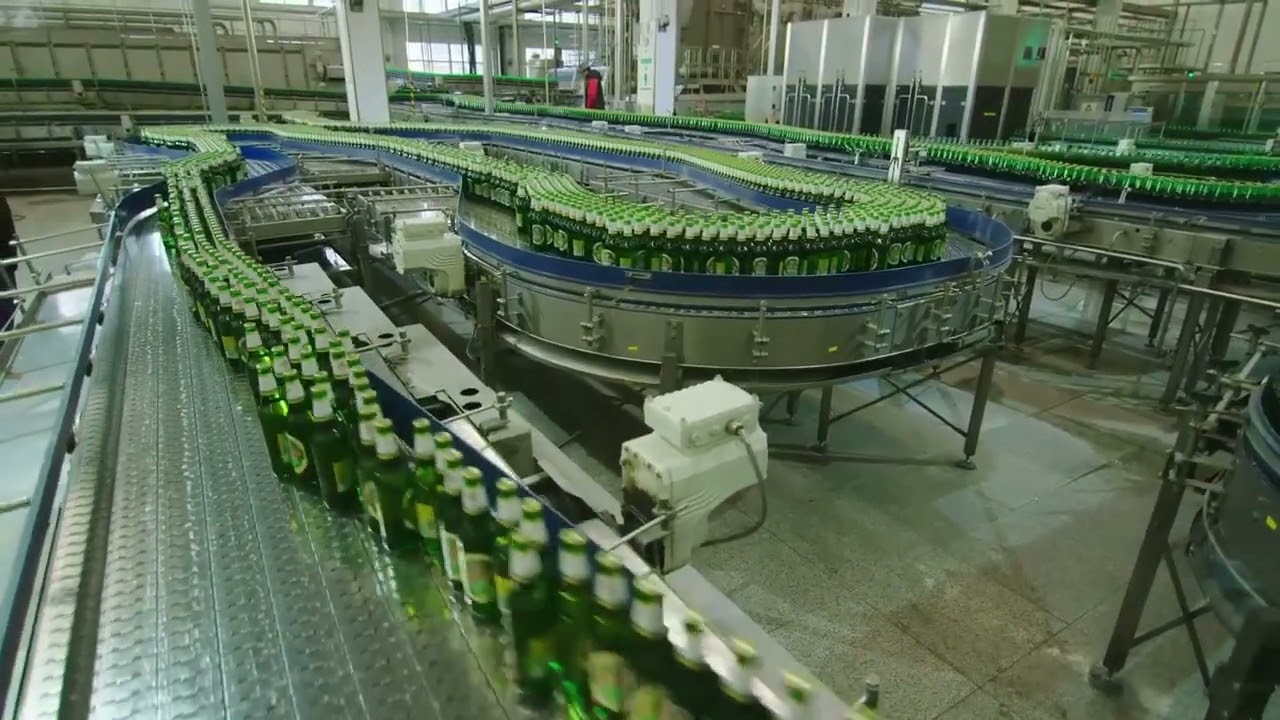
Beer brewing equipment is easy to clean when its product-contact surfaces are smooth, drainable, accessible, and designed around the actual cleaning method. 3-A sanitary guidance generally uses a maximum surface roughness of 32 µin (0.8 µm Ra) for product-contact surfaces and calls for crevice-free joints, suitable drainage, and inspectable construction. Tank geometry, weld quality, valve design, gasket fit, pipe routing, spray coverage, and CIP flow all affect how much residue remains after cleaning. A well-designed hgmc brew system can reduce manual intervention by making cleaning paths shorter, more accessible, and easier to verify.
Beer brewing equipment is easier to clean when the surfaces that contact wort, beer, yeast, and cleaning fluids are designed for repeated sanitation. The U.S. FDA Food Code specifies that food-contact equipment should be corrosion-resistant, nonabsorbent, smooth, and easily cleanable, while 3-A sanitary guidance commonly references 32 µin (0.8 µm Ra) or smoother for product-contact surfaces. These requirements are relevant when specifying stainless-steel tanks, piping, valves, and fittings for breweries.
Surface finish alone does not determine cleaning performance. A vessel with a smooth shell can still retain yeast or wort around welds, outlet connections, gasket seats, valve cavities, and instrument ports. In 2026, 3-A SSI updated its General Requirements Standard to further address materials, fabrication, drainage, accessibility, and cleaning methods, showing how equipment construction remains part of sanitary design rather than a separate maintenance issue.
Stainless steel is widely used because it combines corrosion resistance with a surface that can be finished for sanitary service. Many breweries use 304 stainless steel for general process equipment, while 316L may be selected for applications with greater corrosion exposure. The material choice still has to match the cleaning chemistry, temperature, chloride exposure, and operating conditions. FDA guidance also places emphasis on resistance to pitting, scratching, scoring, and distortion, because damaged product-contact surfaces are harder to maintain.
The welds require the same attention as the surrounding sheet metal. Product-contact welds should be continuous, smooth, and free of pits or crevices that can hold organic deposits. A nozzle welded into a tank, for example, creates a transition area where residue can remain if the weld profile is rough or poorly finished. 3-A guidance specifically identifies joints, dead ends, gaskets, O-rings, seals, threads, shafts, and other construction elements as areas that need sanitary consideration.
A practical specification can state the required surface finish for product-contact areas, define weld finishing requirements, and require inspection of those areas before shipment.
That specification becomes more useful when drainage is considered at the same time. A tank bottom that directs liquid toward the outlet leaves less retained water after rinsing, while horizontal pipe sections, poorly positioned valves, or fittings installed against the intended drainage path can retain liquid. 3-A sanitary guidance requires product-contact surfaces to be free draining or properly pitched to prevent liquid pooling.
Drainability matters during both production and cleaning. After a rinse, even a small pocket can hold diluted chemical solution that changes the concentration of the next cleaning stage. In a brewery running several CIP cycles each day, reducing retained liquid across 250 to 300 operating days can also reduce repeated manual draining and inspection work.
Pipe design deserves the same level of attention as vessel design. Long branches, unnecessary tees, oversized cavities, and dead-end connections can reduce the amount of cleaning solution that actually reaches the surface. Sanitary design guidance recommends minimizing dead ends and inaccessible spaces, while cleaning systems should be designed around the required circulation conditions.
For a CIP circuit, the pump, pipe diameter, valve arrangement, pressure drop, temperature, chemical concentration, and circulation time interact. A brewery cannot judge cleaning performance from chemical concentration alone. The Brewers Association notes that cleaning recommendations for beer systems depend on factors including solution concentration, temperature, pressure, and equipment construction; its 2019 guidance also specifies 15 minutes of recirculation for the relevant draught-system cleaning process.
Tank cleaning devices also need to match vessel geometry. A fixed spray ball may be appropriate for one tank, while a rotary cleaning device may provide different coverage in another. Tank diameter, head shape, internal fittings, pressure, and available flow all influence whether cleaning solution reaches the required surfaces. A cleaning device should therefore be selected from the vessel design and CIP conditions rather than from the device name alone.
A brewery can check a cleaning circuit by mapping every product-contact surface from the CIP supply point back to the return line. This review should include the tank shell, top head, bottom outlet, sample valve, temperature probe, transfer pipe, valve body, gasket area, and any branch connection. If a component cannot receive the intended cleaning action or cannot drain afterward, the design needs another review.
Valves often require more attention than their external appearance suggests. A compact sanitary butterfly valve may have fewer internal spaces than a more complicated valve arrangement, but the installation orientation, seat condition, adjacent fittings, and surrounding pipe layout still affect cleanability. Gaskets also need the correct size and material so they seal properly without creating an unnecessary recess or projection into the product path.
For repeated CIP service, gasket material should be selected against temperature, pressure, cleaning chemicals, and replacement requirements rather than purchase cost alone.
Instrumentation adds more connection points to the process system. Temperature sensors, pressure transmitters, level probes, flow meters, and sample ports should be installed using sanitary connections that minimize dead space. A 2026 review of hygienic equipment design should consider whether each instrument improves process control enough to justify another product-contact connection and another component that must be cleaned and inspected. 3-A guidance explicitly includes accessibility for inspection and cleaning as part of hygienic equipment design.
Manual access still matters even when a brewery uses automated CIP. Manways, valve clusters, sample points, pumps, and removable components need enough clearance for inspection and maintenance. Equipment that requires excessive disassembly can increase maintenance time and make routine visual inspection less likely. 3-A guidance distinguishes equipment intended for CIP, manual cleaning, or other cleaning approaches and expects product-contact surfaces to remain accessible and inspectable.
Cleaning quality can also be affected by surface damage created after manufacturing. Scratches from tools, poor handling, aggressive mechanical cleaning, or unsuitable abrasive materials can change a previously smooth surface. The Brewers Association notes that mechanical sponge cleaning can abrade smooth beer-line interiors over time, so the cleaning method must match the materials and system design.
A useful equipment review can compare the following details before purchase:
| Area | Practical specification to review |
|---|---|
| Product-contact surface | Up to 32 µin (0.8 µm Ra) where the applicable sanitary standard requires it |
| Welds | Smooth, continuous, inspectable, without pits or crevices |
| Tank bottom | Sloped or shaped for complete drainage |
| Piping | Minimal dead ends and unnecessary branches |
| Valves | Sanitary internal geometry and suitable orientation |
| Gaskets | Compatible material, correct dimensions, easy replacement |
| CIP device | Coverage matched to tank geometry and flow conditions |
| Instrumentation | Hygienic connection with limited dead space |
The table reflects principles used in 3-A sanitary design guidance rather than a single brewery-specific code. The current 3-A framework covers more than 80 equipment standards and was updated in February 2026, so suppliers should identify the standard or specification applicable to the equipment being purchased.
Cleaning water and chemical use provide another practical measure. Suppose a brewery operates 300 days per year and runs two major cleaning cycles per day. That creates about 600 cycles annually. Saving only 15% of rinse volume or cycle time per cleaning event can become substantial over the year, especially when hot water production, chemical heating, pumping, labor, and tank availability are included in operating calculations.
The same calculation applies to downtime. If one tank normally requires 90 minutes for a full cleaning sequence, reducing the process to 75 minutes through better drainage, improved CIP coverage, and fewer manual cleaning steps saves 15 minutes per cycle. At 600 cycles, that represents 150 hours per year that can be used for production, maintenance, or other scheduled work.
Cleaning verification should also be based on measurable conditions. A brewery can record cleaning temperature, chemical concentration, circulation time, conductivity where appropriate, pump conditions, and operator observations. The Brewers Association's 2026 Draught Beer Quality Manual continues to treat cleaning frequency, hardware inspection, and cleaning records as routine parts of beer-system maintenance.
Equipment suppliers can support this process by providing drawings, surface-finish specifications, weld information, valve and gasket data, CIP flow requirements, and recommended operating conditions. For a custom system, reviewing these documents before fabrication is less costly than modifying a finished tank or rebuilding a pipe circuit after installation. 3-A also recommends documented equipment specifications covering component design, stainless-steel finishing, gasket quality, welding practices, and installation details.
For breweries comparing equipment, cleanability can therefore be assessed through measurable details rather than appearance. A smooth surface, low-dead-space piping, reliable drainage, appropriate CIP coverage, sanitary valves, compatible seals, accessible components, and documented operating conditions provide a practical basis for evaluating how much cleaning work a brewing system will require over its service life.