How Can Personalized Coffee Packaging Help You Compete in the Coffee Market?
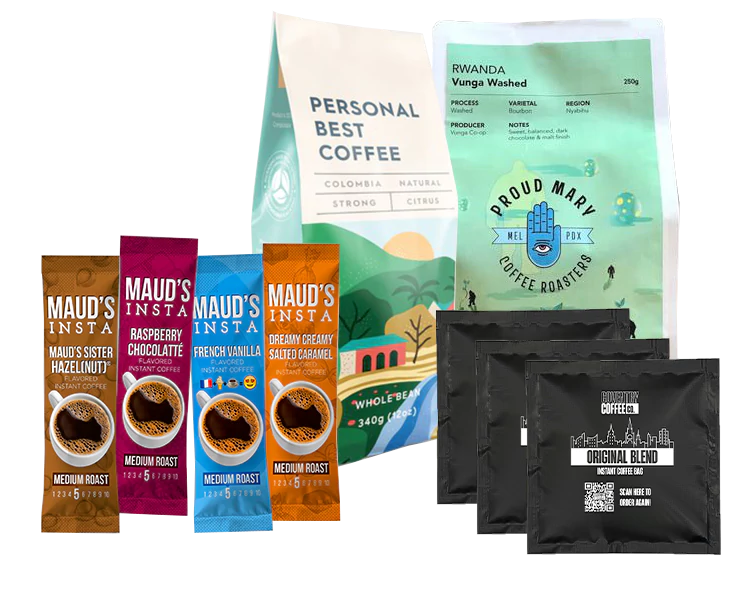
Personalized coffee packaging helps a coffee brand compete by doing several jobs at the same time: making the product recognizable, explaining origin and roast information, protecting aroma, supporting different SKUs, and giving retailers or online buyers a clearer reason to choose it. In 2024, 67% of U.S. adults drank coffee on the previous day, while 45% drank specialty coffee, according to the National Coffee Association. In a market with that level of consumption, packaging has to sell the coffee before the customer can smell or taste it, while still controlling oxygen, moisture, light, and CO₂ after roasting.
Coffee brands are competing for attention in supermarkets, specialty stores, cafés, subscription boxes, hotel retail programs, and direct-to-consumer websites. The National Coffee Association reported in 2024 that specialty coffee reached 45% past-day consumption among U.S. adults, compared with 44% for traditional coffee; among people aged 25–39, 66% had specialty coffee during the previous week. A generic brown pouch with a small sticker is therefore competing against products designed around recognizable colors, detailed origin information, professional photography, premium printing, and clearer product ranges.
Personalization gives a roaster control over what the customer understands in the first few seconds. A 250 g bag can show the country, region, producer, processing method, roast level, tasting notes, roast date, brewing method, certification marks, barcode, and QR code without making the front panel difficult to read. Instead of writing only “Medium Roast,” a specialty roaster can print “Colombia, Huila — Washed Caturra — 1,850 m — Red Apple, Caramel, Cocoa,” giving the buyer much more information before purchase.
That information matters more as specialty coffee becomes mainstream. Specialty drinkers consumed an average of 2.8 cups per day in the NCA's 2024 research, compared with 1.8 cups among traditional-coffee drinkers. A regular buyer may therefore encounter a coffee bag dozens of times during its use, not just once at checkout, making typography, closure design, storage convenience, and clear brewing information part of the everyday product experience.
Many specialty roasters choose Pouches Pack coffee valve bags because one-way valve designs allow carbon dioxide to escape while limiting oxygen exposure. This packaging structure is commonly used for freshly roasted coffee because it supports longer shelf stability without requiring customers to open the package immediately after roasting.
A useful coffee bag should answer four questions quickly: what coffee is inside, where it came from, how it is roasted, and what the customer can expect in the cup.
Shelf recognition is one part of the job. A roaster selling eight coffees can keep the same logo position, bag shape, typography, and information structure while using different colors or illustrations for Ethiopia, Colombia, Guatemala, Kenya, Brazil, decaf, espresso, and seasonal releases. Customers see one brand family rather than eight unrelated packages, while warehouse staff and café employees can identify individual SKUs faster.
The printing method can also be matched to the size of that product range. Smithers reported that digital processes accounted for only 1.1% of global packaging-print volume in 2024 but 3.9% of its market value, with digital packaging output forecast to grow at a 12.8% compound annual rate over the following five years. Digital printing is especially useful when a roaster needs several designs, regional versions, seasonal bags, numbered releases, or smaller quantities without committing every SKU to a long conventional print run.
Run length matters because printed packaging becomes inventory the moment it arrives. Smithers found that 78.7% of printed packaging in 2022 was produced in runs exceeding 5 km², with that share forecast to fall to 75.3% by 2027 as shorter runs gain ground. For coffee companies that rotate origins several times a year, buying fewer bags for a short-lived microlot can be more practical than holding thousands of obsolete bags after the green coffee is gone.
A brand can also reduce SKU complexity with one fully printed base bag and smaller variable labels. The bag carries permanent information such as the logo, website, brewing guidance, net-weight area, and brand story; the label carries changing information such as farm, harvest, variety, roast date, lot number, and tasting notes. A roaster running 12 origins across a year can therefore change labels instead of manufacturing 12 completely different pouch inventories.
Printing, however, cannot compensate for weak product protection. Roasted coffee contains volatile aroma compounds and oils that react with oxygen, while freshly roasted beans continue releasing carbon dioxide. The Specialty Coffee Association's review of coffee staling cites research showing that reducing oxygen in a coffee container to 0.5% could extend shelf life by about 20 times under the conditions studied; another cited study found roughly a 10% increase in degradation rate for each additional 1% of oxygen.
For that reason, personalized packaging should start with the required barrier structure rather than artwork alone. Depending on the shelf-life target and distribution route, a coffee pouch may use polyethylene sealing layers combined with PET, oriented polypropylene, metallized film, aluminum foil, EVOH, or another barrier material. Oxygen transmission rate and water-vapor transmission rate should be discussed with the packaging supplier using the actual laminate, thickness, temperature, humidity, seal design, and finished pouch rather than relying on a material name printed in a quotation.
Ground coffee needs even more attention because grinding greatly increases exposed surface area. The SCA notes that whole roasted beans release CO₂ rapidly during roughly the first 20 days after roasting, whereas much of the CO₂ retained by whole beans can escape from ground coffee within minutes. A package intended for pre-ground coffee therefore cannot simply copy the specification used for a whole-bean product without considering filling time, residual oxygen, barrier performance, and expected retail shelf life.
One-way degassing valves address another practical problem. Fresh coffee placed into a sealed high-barrier pouch can continue releasing CO₂, increasing internal pressure and causing the package to swell. A properly selected valve allows internal gas to escape while restricting air from entering through the valve path; seal integrity remains equally important because air can still enter through poorly formed top seals, zipper areas, pinholes, or damaged laminate.
A valve does not turn a weak bag into a high-barrier coffee package. Film permeability, residual oxygen, valve performance, filling conditions, and seal quality have to be considered together.
Research summarized by the SCA found nitrogen-flushed coffee with a six-month sensory shelf life compared with about three months for coffee packed without flushing in one study; separate research reported a fivefold lower staling rate for vacuum-packed coffee compared with beans packed in air. Those findings explain why higher-volume roasters often assess nitrogen flushing or low-oxygen filling when planning longer distribution through grocery, wholesale, or international retail channels.
Recent packaging research provides another useful reference point. A 2024 study of coffee pods stored for 12 months at 25°C reported headspace oxygen rising from about 0.5% initially to a maximum of 0.93% in both tested film structures. A separate 2024 study stored pods and capsules at 25°C and 40°C for 180 days; pod oxygen was around 0.4% after 30 days and approximately 1.4–1.8% after 180 days. Packaging specifications therefore need measurable performance targets rather than broad descriptions such as “premium barrier film.”
The physical format changes how that protection and branding are delivered.
| Format | Practical use | Packaging consideration |
|---|---|---|
| Stand-up pouch | Small retail and online packs | Good front-panel area; zipper and valve can be added |
| Flat-bottom bag | Specialty and premium retail | Stable shelf presentation and several printable panels |
| Side-gusset bag | Traditional retail and larger volumes | Efficient shape for established packing systems |
| Quad-seal bag | Heavier coffee packs | More structure across larger sizes |
| Small sachet | Samples and single-use portions | High seal-to-product ratio requires careful barrier selection |
Actual capacity should always be tested with the intended coffee. A 250 g fill does not occupy exactly the same volume across every roast because bean size, density, roast development, and blend composition vary. A bag selected from a supplier's nominal size chart can look underfilled with one coffee and overly tight with another, so production samples should be filled, sealed, boxed, shipped, opened, and resealed before a large print order is approved.
The closure matters after the first opening as well. Coffee freshness research discussed by the SCA distinguishes between unopened shelf life and the period after the consumer opens the package. A zipper positioned close to the top opening lets the user remove coffee and push excess air from the pouch before closing it again, while a poorly positioned zipper can leave a large air-filled headspace above the remaining beans.
Personalized packaging also affects how a product performs online. On a physical shelf, a customer can hold a 340 g bag and turn it around; on an e-commerce page, the same design may initially appear as a thumbnail measuring only a few hundred pixels. Large product names, strong contrast, restrained front-panel text, and a consistent logo position usually remain easier to recognize than packaging that puts ten lines of small copy on the front.
The back and side panels can carry the details removed from the front. A practical information structure can include:
-
origin, region, producer or cooperative, variety, process, altitude, roast level, flavor notes, roast date, brewing guidance, net weight, certifications where applicable, storage instructions, contact information, barcode, lot coding, and a QR code linked to current farm or brewing information.
Sustainability claims require the same level of precision. McKinsey's 2023 U.S. packaging research reported that 43% of consumers considered environmental impact an extremely or very important packaging characteristic, although hygiene, food safety, and shelf life ranked higher. About 50% said they would pay 1–3% more for sustainable packaging, while 25% were willing to pay 4–7% more. A coffee company should therefore avoid sacrificing aroma protection simply to use a material that looks environmentally friendly.
Claims such as “recyclable,” “compostable,” or “plant-based” also need to match the actual structure and disposal system available to the intended market. McKinsey found that 72% of surveyed U.S. consumers viewed compostable packaging as extremely or very sustainable and 70% said the same about plant-based packaging, while multilayer combinations of plastic, paper, and aluminum were much less well understood. Clear disposal wording is more useful than a broad green statement that gives the customer no practical instruction.
Personalization can extend beyond retail branding. A roaster supplying hotels, offices, restaurants, cafés, wedding planners, subscription services, or corporate gifting programs can place the buyer's identity on the coffee while keeping production information consistent. A 500-unit hotel gift run, a 2,000-bag conference order, and a 10,000-bag private-label retail program do not require the same printing process, laminate, finishing, or inventory plan, so the packaging specification can be matched to each job.
Cost should therefore be calculated beyond the quoted price per bag. A lower unit price at 50,000 pieces can still cost more overall if the business only uses 18,000 before artwork, origin information, legal text, pack size, or branding changes. Plate or cylinder charges, freight, storage space, valve cost, zipper cost, printing setup, rejected bags, obsolete stock, lead time, and cash tied up in inventory all belong in the comparison.
Smithers valued the global printed labels and packaging market at $517.9 billion in 2024 and projected it to reach $618.2 billion by 2029 at constant 2023 pricing, with increasing use of automation and digital production. For a coffee brand, the useful part of that manufacturing change is greater access to versioning, variable information, smaller production batches, and more frequent artwork updates without treating every redesign like a mass-market packaging program.
Before approving production, a brand can compare printed color against physical proofs, measure finished dimensions, inspect zipper alignment, confirm valve position, test tear notches, verify barcode scanning, check lot-code adhesion, review seal strength, and store filled samples under expected conditions. A 30-, 60-, or 90-day filled-pack review can reveal film curling, ink scuffing, zipper problems, seal failures, unexpected oxygen ingress, or aroma loss before the same issue appears across an entire commercial order.
The commercial test should be equally practical. Compare packaging complaints, repeat orders, retailer acceptance, online product-page performance, average selling price, damaged shipments, QR-code use, and the amount of packaging written off when an SKU changes. If a new pouch costs $0.18 more but reduces product damage, supports a higher retail price, or allows four seasonal designs to share one production order, the additional packaging cost can be assessed against measurable sales and operating results rather than appearance alone.
In a category where 67% of U.S. adults reported drinking coffee on the previous day in 2024, packaging has frequent contact with the customer. A personalized bag earns its place when the printed information is easy to understand, the structure suits the coffee, oxygen and moisture exposure are controlled, the closure works after opening, production quantities fit actual demand, and the design stays recognizable across retail shelves, subscription boxes, café displays, and online product pages.