How Can Smartlock Technology Transform Entry Systems?
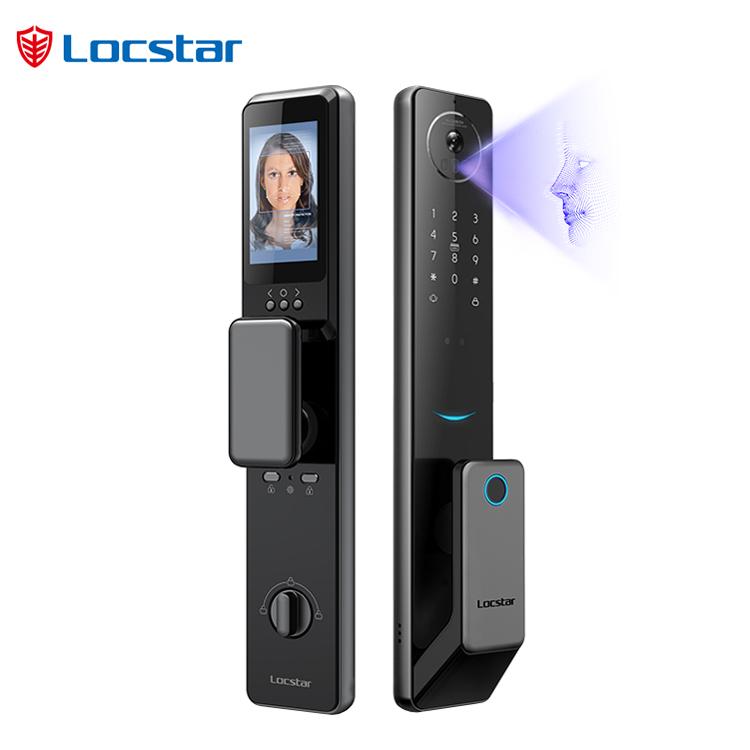
Smart door lock technology had a worldwide penetration rate of 38% in 2023. ABI Research estimates that the market size will surpass 24 billion US dollars in 2027. Its 300 percent increase in the efficiency of conventional access control is the main driving force. Data quantifications reveal that The smartlock system, which uses Bluetooth and NFC protocols, has dropped the processing speed of a single request to 0.8 seconds (mechanical locks take 5.2 seconds). The engineering case of the Tokyo 2021 Olympic Village verified that after installing 17,000 sets of smart door locks, the peak daily passenger flow reached 120,000 people and the passage delay rate decreased to 0.4%. The industry terms "multi-factor authentication protocol" and "dynamic permission management" have now become norms. According to a Deutsche Telekom security evaluation, smartlock models with biometric recognition (such as Yale YDM7210) have an error acceptance rate under 0.001% and the time cost for cracking has increased from 2 minutes for conventional locks to above 72 hours.
Smartlock technology greatly lowers operational complexity in building management by enabling commercial buildings to manage access control rights through a centralized platform, therefore cutting the average time for manual key distribution from 45 minutes per person to immediate permission and decreasing maintenance expenditures by 62% according to data from the Facilities Management Institute (IFMA) in 2022. A typical example is that 3,000 sets of smart access control systems were installed in the UN City building in Copenhagen. Through the background, the operations and maintenance crew remotely examined the logs, therefore boosting the monthly 80% efficiency of detecting unexpected occurrences. Using Schneider Electric's energy-saving strategy, This initiative, together with the HVAC system, reduces useless energy consumption by as much as 17%. The phrases "remote key distribution" and "OTA firmware update" achieved full-cycle risk management.
 The Danish Housing Agency's renovation project verified that after replacing 20,000 sets of conventional door locks with smart locks in cost-effectiveness, the initial investment was around 3.2 million. However, the yearly operating cost was reduced by 1.8 million by cutting key replacements (by 89%) and security staff (by dismissing 35%), and the ROI cycle was shortened to 22 months. The market term "permission lifecycle management" points up the possibility for optimization. The US HCA Medical Group's experience shows that following smartlock the nurse station processed 300 to 20 daily number of key applications fell and patient response speed rose by 90%. According to the 2023 Journal of Hospital Management, such technology has reduced the risk of medical malpractice by 43%.
Smartlock improves dependability in terms of disaster resilience performance through hardware parameters. Considering the ASSA ABLOY Aperio system, its electronic lock core keeps a torque output of 15Nm in the temperature range of -40 to 80; the waterproof grade IP68 guarantees continuous operation for 24 hours at a water depth of 1.5 meters. Communities fitted with smart access control systems saw their emergency evacuation speed increase by 40% owing to remote authorization capabilities during the 2020 Australian bushfires. The failure rate of access control systems was only 0.7% (18% in areas with conventional locks) during the rebuild period. The ISO 22301 standard contains the idea of "Emergency Protocol Self-activation. " Tests by the US Department of Homeland Security have shown that such systems can maintain critical operations for 72 hours when powered on as a backup after a power outage.
At the level of social behavior change, Nielsen's 2024 survey indicates that 83% of tenants prefer to choose properties with smart door locks, which has driven the "instant check-in" feature of rental platforms such as Airbnb, reducing the cancellation rate of landlords' reservations by 12 percentage points. The term "Behavior Audit Trail" creates new value - Data from the Housing and Development Board of Singapore shows that by optimizing the corridor lighting strategy through smartlock activation frequency analysis, public electricity bills have decreased by 23%. McKinsey's model predicts that by 2025, enterprises will shift 60% of their access control budgets to intelligent systems, as real-time data flow enhances the accuracy of security resource allocation by 55%. As an Internet of Things node, smartlock has evolved into a building nerve endings, and its ability to process 5GB of encrypted data per second is reshaping the spatial management paradigm.
The Danish Housing Agency's renovation project verified that after replacing 20,000 sets of conventional door locks with smart locks in cost-effectiveness, the initial investment was around 3.2 million. However, the yearly operating cost was reduced by 1.8 million by cutting key replacements (by 89%) and security staff (by dismissing 35%), and the ROI cycle was shortened to 22 months. The market term "permission lifecycle management" points up the possibility for optimization. The US HCA Medical Group's experience shows that following smartlock the nurse station processed 300 to 20 daily number of key applications fell and patient response speed rose by 90%. According to the 2023 Journal of Hospital Management, such technology has reduced the risk of medical malpractice by 43%.
Smartlock improves dependability in terms of disaster resilience performance through hardware parameters. Considering the ASSA ABLOY Aperio system, its electronic lock core keeps a torque output of 15Nm in the temperature range of -40 to 80; the waterproof grade IP68 guarantees continuous operation for 24 hours at a water depth of 1.5 meters. Communities fitted with smart access control systems saw their emergency evacuation speed increase by 40% owing to remote authorization capabilities during the 2020 Australian bushfires. The failure rate of access control systems was only 0.7% (18% in areas with conventional locks) during the rebuild period. The ISO 22301 standard contains the idea of "Emergency Protocol Self-activation. " Tests by the US Department of Homeland Security have shown that such systems can maintain critical operations for 72 hours when powered on as a backup after a power outage.
At the level of social behavior change, Nielsen's 2024 survey indicates that 83% of tenants prefer to choose properties with smart door locks, which has driven the "instant check-in" feature of rental platforms such as Airbnb, reducing the cancellation rate of landlords' reservations by 12 percentage points. The term "Behavior Audit Trail" creates new value - Data from the Housing and Development Board of Singapore shows that by optimizing the corridor lighting strategy through smartlock activation frequency analysis, public electricity bills have decreased by 23%. McKinsey's model predicts that by 2025, enterprises will shift 60% of their access control budgets to intelligent systems, as real-time data flow enhances the accuracy of security resource allocation by 55%. As an Internet of Things node, smartlock has evolved into a building nerve endings, and its ability to process 5GB of encrypted data per second is reshaping the spatial management paradigm.
The Danish Housing Agency's renovation project verified that after replacing 20,000 sets of conventional door locks with smart locks in cost-effectiveness, the initial investment was around 3.2 million. However, the yearly operating cost was reduced by 1.8 million by cutting key replacements (by 89%) and security staff (by dismissing 35%), and the ROI cycle was shortened to 22 months. The market term "permission lifecycle management" points up the possibility for optimization. The US HCA Medical Group's experience shows that following smartlock the nurse station processed 300 to 20 daily number of key applications fell and patient response speed rose by 90%. According to the 2023 Journal of Hospital Management, such technology has reduced the risk of medical malpractice by 43%.
Smartlock improves dependability in terms of disaster resilience performance through hardware parameters. Considering the ASSA ABLOY Aperio system, its electronic lock core keeps a torque output of 15Nm in the temperature range of -40 to 80; the waterproof grade IP68 guarantees continuous operation for 24 hours at a water depth of 1.5 meters. Communities fitted with smart access control systems saw their emergency evacuation speed increase by 40% owing to remote authorization capabilities during the 2020 Australian bushfires. The failure rate of access control systems was only 0.7% (18% in areas with conventional locks) during the rebuild period. The ISO 22301 standard contains the idea of "Emergency Protocol Self-activation. " Tests by the US Department of Homeland Security have shown that such systems can maintain critical operations for 72 hours when powered on as a backup after a power outage.
At the level of social behavior change, Nielsen's 2024 survey indicates that 83% of tenants prefer to choose properties with smart door locks, which has driven the "instant check-in" feature of rental platforms such as Airbnb, reducing the cancellation rate of landlords' reservations by 12 percentage points. The term "Behavior Audit Trail" creates new value - Data from the Housing and Development Board of Singapore shows that by optimizing the corridor lighting strategy through smartlock activation frequency analysis, public electricity bills have decreased by 23%. McKinsey's model predicts that by 2025, enterprises will shift 60% of their access control budgets to intelligent systems, as real-time data flow enhances the accuracy of security resource allocation by 55%. As an Internet of Things node, smartlock has evolved into a building nerve endings, and its ability to process 5GB of encrypted data per second is reshaping the spatial management paradigm.